


What Are Zipblinds Used For in Modern Homes?
A sunny balcony can become the least-used part of an apartment by midafternoon. Add wind, light rain, nearby neighbors, and glare on your phone screen, and that valuable outdoor space starts feeling harder to enjoy. So, what are zipblinds used for? They are designed to make semi-outdoor areas more comfortable, private, and usable in changing weather conditions.
Zipblinds are outdoor roller blinds that run within side channels. The fabric is held securely at the edges rather than hanging loosely like a standard roller blind. This simple design makes a noticeable difference in balconies, patios, terraces, pergolas, and other sheltered outdoor zones where sun and wind can affect everyday comfort.
What Are Zipblinds Used For Around the Home?
The most common purpose of zipblinds is solar control. They reduce direct sunlight before it enters your living area or hits your balcony floor, outdoor furniture, and glass doors. In homes with strong afternoon sun, this can make the space feel less harsh and help reduce glare indoors.
They are also used to create privacy without permanently closing off a view. A balcony that faces another block, a neighboring patio, or a shared common area can feel exposed. Lowering a zipblind gives you a visual screen when you need one, while allowing you to raise it again when you want an open outlook.
For many homeowners, the real value is flexibility. A balcony can serve as a coffee spot in the morning, a work-from-home break area in the afternoon, and a family dining space in the evening. Zipblinds let you adjust the environment instead of avoiding the space whenever the weather changes.
Shade and glare reduction
Direct sunlight is not only uncomfortable. It can make TV screens, laptops, and phones difficult to see, heat up balcony tiles, and fade cushions or outdoor furniture over time. Depending on the selected fabric, zipblinds filter a portion of the sun while preserving varying levels of outward visibility.
Sunscreen fabrics are a popular choice when you want daylight and a view with reduced glare. More opaque materials provide stronger shading and privacy, but they naturally limit visibility and light. The right option depends on the direction your home faces, how exposed the area is, and whether your priority is brightness, privacy, or heat reduction.
Privacy for close-facing homes
In urban homes, privacy often matters as much as shade. Apartments, HDB flats, and condos may have balconies or windows facing nearby units. A zipblind creates a clean visual boundary without the bulky look of curtains or the fixed appearance of a wall.
This is especially useful for ground-floor patios, service yards, and balconies used for relaxing or entertaining. You can lower the blind only when needed, which keeps the area more open than permanent privacy screens.
Protection from light rain and wind
Because the fabric is guided through side tracks, zipblinds are more stable than conventional outdoor blinds. They help reduce wind-blown rain and light debris entering a sheltered space, making it easier to use a balcony during a passing shower or breezy evening.
That said, zipblinds are not a substitute for a fully enclosed room. Heavy rain, strong gusts, and severe weather can still reach an open-sided area. They should be used according to the manufacturer's operating guidance, and it is sensible to raise them in extreme weather when advised. Their job is to improve comfort in a semi-outdoor setting, not to turn a balcony into a weatherproof extension of the living room.
Making Balconies and Patios More Usable
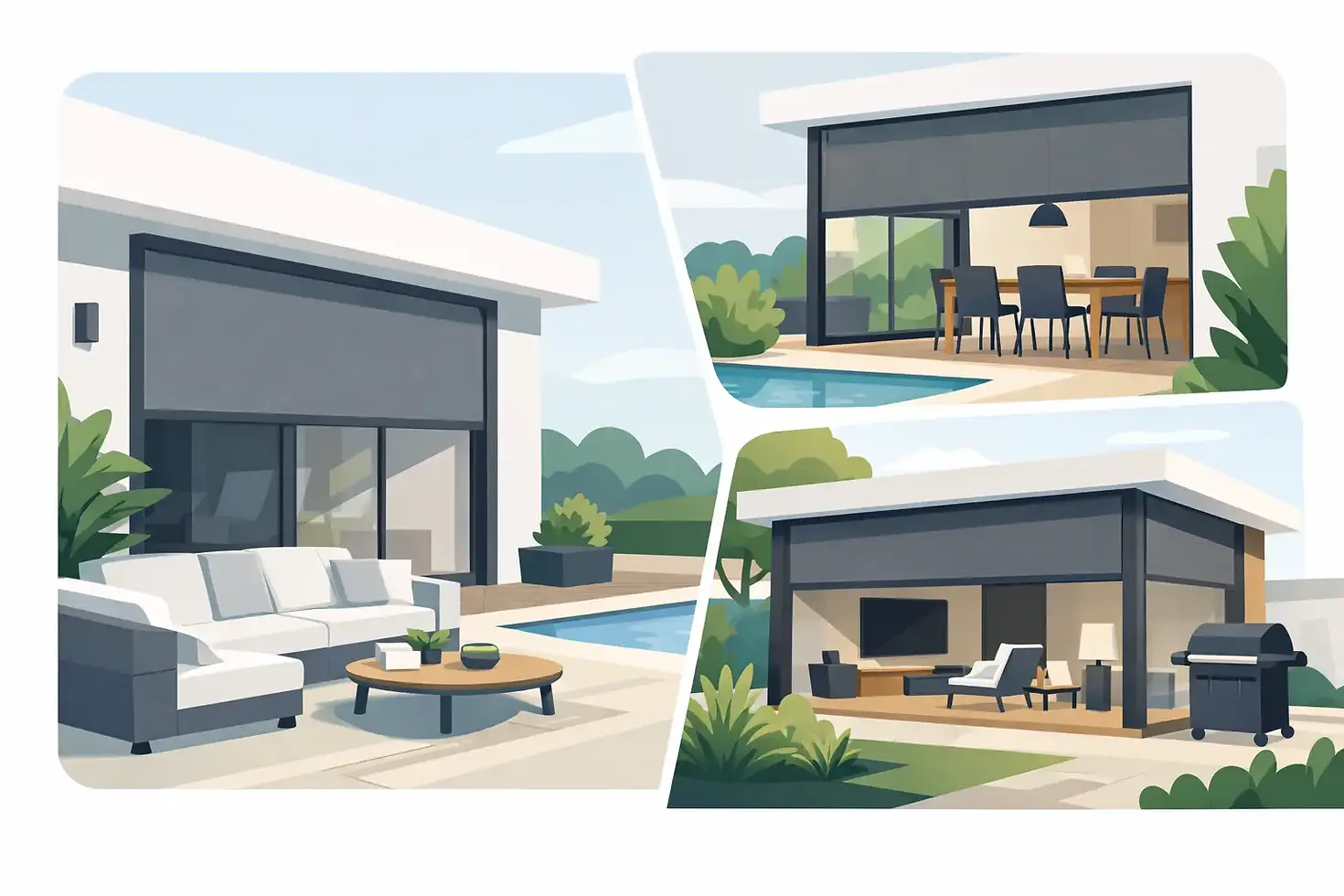
A zipblind can help define how an outdoor area works. On a balcony, it can cut the glare that makes the space uncomfortable after lunch. On a patio, it can provide privacy for meals or casual gatherings. Around a pergola or covered terrace, it can add a layer of shade and shelter while keeping the structure visually light.
For homes with young children or pets, a more protected-feeling balcony can also offer peace of mind during supervised family time. The blind does not replace safety grilles, railings, or proper childproofing, but it can make the space feel calmer and less exposed.
Laundry areas are another practical application. A zipblind may reduce direct rain and wind entering a service yard while still allowing airflow. However, it should not block ventilation requirements or interfere with access to essential building fixtures. Measure the area carefully and consider how doors, windows, drying racks, and air-conditioning ledges will be used before installation.
Manual or Motorized Zipblinds?
Manual zipblinds are a practical choice for smaller openings and homeowners who prefer a simple, cost-conscious setup. They are easy to operate and do not require electrical planning.
Motorized zipblinds offer more convenience for larger, higher, or frequently used openings. With a remote, wall control, or compatible smart home system, you can lower the blinds before the afternoon sun hits or raise them when the weather clears. This is useful when your balcony is part of your daily routine rather than an occasional outdoor area.
Automation can make the feature feel more natural in a connected home. A scheduled routine can lower blinds at peak sun hours, while scenes can pair them with lighting, ceiling fans, or other home controls. The benefit is not technology for its own sake. It is fewer small adjustments to remember throughout the day.
Motorization does come with additional cost and requires suitable power planning. It is best considered early in a renovation, especially if you want concealed wiring or integrated controls. Retrofitting is still possible in many homes, but the installation approach may be more visible depending on the site conditions.
Choosing the Right Fabric and Setup
A good zipblind installation starts with the opening, not the color. Measure the width and height, check for obstructions, and consider where the cassette and side channels will sit. Uneven walls, sliding doors, pipes, railings, and false ceilings can all affect the final design.
Fabric selection matters just as much. Think about sun direction, desired privacy, airflow, and maintenance. Darker sunscreen fabrics may offer better outward visibility during the day, while lighter colors can brighten the area but may show dirt more easily. Privacy is also different by day and night. When interior lights are on after dark, a sunscreen fabric may not provide the same level of privacy from outside.
Color should work with your exterior finishes and interior style. Neutral shades usually blend easily with modern condo and BTO interiors, while darker tones can create a more defined frame around an outdoor zone. Choose a finish that supports the overall look of the home rather than treating the blind as an afterthought.
When Zipblinds May Not Be the Best Fit
Zipblinds work best in covered or semi-covered spaces with suitable mounting points. If your area is fully exposed to harsh weather, has no stable structure for installation, or faces building management restrictions, another shading solution may be more appropriate.
Before deciding, check your property's renovation guidelines. Condos and managed developments may have rules on balcony fixtures, exterior appearance, drilling, color choices, and installation timing. For HDB homes, homeowners should also ensure that any proposed work follows applicable requirements and does not obstruct shared areas or safety features.
Cost is another consideration. Larger openings, motorized systems, premium fabrics, and complex site conditions will increase the budget. A lower-priced blind may look appealing initially, but proper measurements, secure side channels, reliable components, and professional installation matter for smooth operation over time.
A Practical Upgrade for Everyday Comfort
Zipblinds are used to solve everyday outdoor-living problems: harsh sun, unwanted glare, close-facing neighbors, light rain, and breezy balconies that are difficult to enjoy. They give homeowners more control over spaces that are often overlooked during renovation planning.
When selected for the right opening and installed properly, they can turn a balcony or patio from a space you pass by into one you actually use. Smart Home Elements can help homeowners consider zipblinds alongside motorized window coverings, lighting, fans, and other practical upgrades, so each part of the home works better together.


Comments