


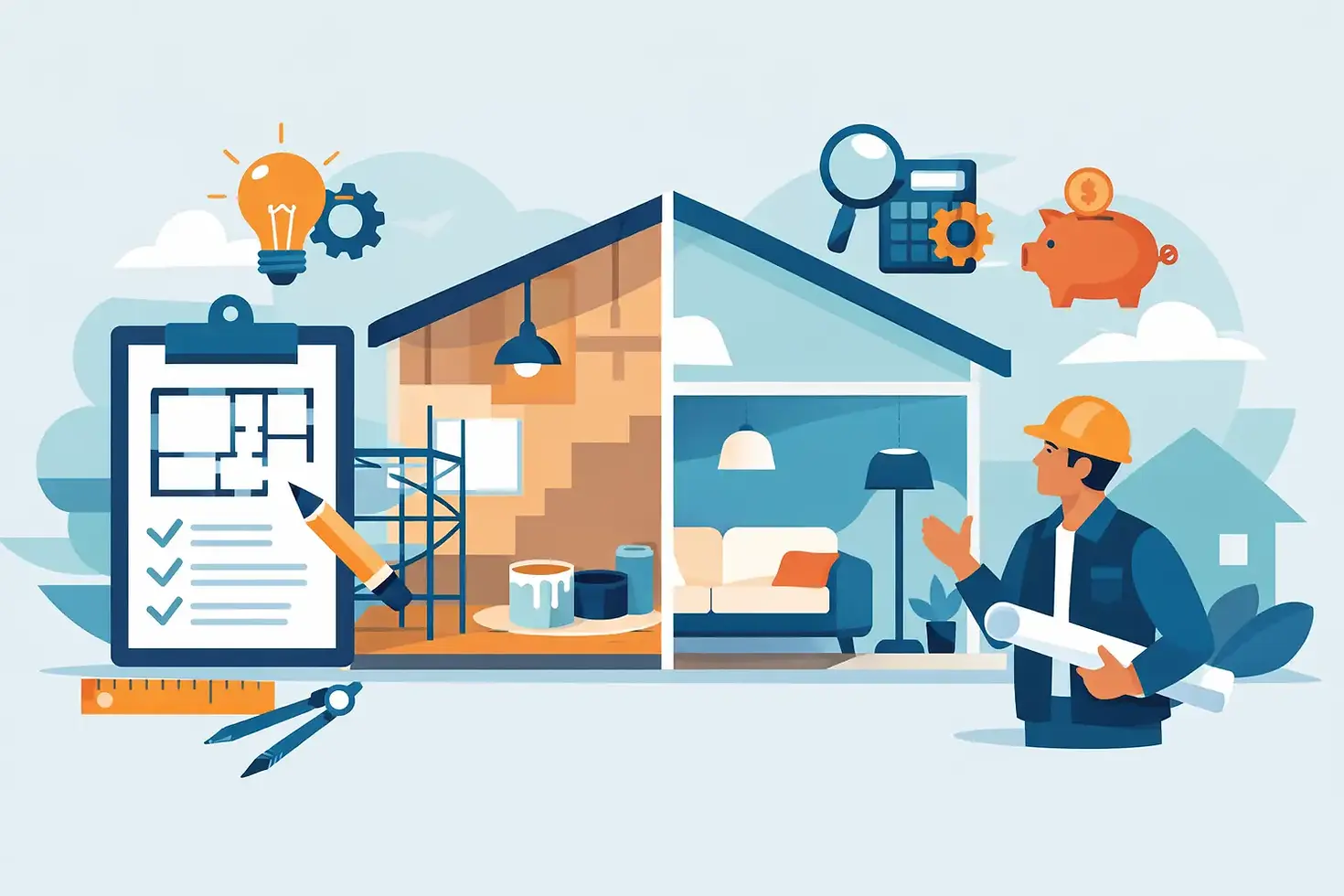
Smart Renovation Planning Guide for Homes
The costly part of renovation usually is not the tile, the fan, or the lighting. It is finding out too late that everything was chosen in isolation. A smart renovation planning guide helps you avoid that mistake by treating your home as one connected system - where comfort, storage, lighting, access, and daily routines work together from day one.
For homeowners upgrading a condo, HDB flat, or BTO home, the goal is usually simple. You want a home that looks clean, feels comfortable, and removes small daily frustrations. That means more than picking attractive finishes. It means planning around how you live, how much effort you want to save, and which upgrades should be done together instead of added later at a higher cost.
What a smart renovation planning guide really means
Smart renovation does not mean filling every room with gadgets. It means choosing upgrades that make everyday living easier and fit naturally into your renovation scope. A motorized curtain, a digital lock, better kitchen fittings, smarter switches, improved airflow, and cleaner lighting control can all be part of the same plan if they are considered early enough.
That early planning matters because many practical upgrades depend on wiring points, carpentry dimensions, power access, or concealed mounting. Once the walls are closed and the cabinets are up, your options narrow fast. A renovation that looks complete on handover can still feel unfinished if the details behind daily convenience were missed.
This is why smart planning should begin with routines, not products. Ask what happens when you leave for work, come home with groceries, put the kids to sleep, run laundry, or manage guests and deliveries. Those moments reveal where automation, storage, lighting, and fittings can reduce friction.
Start with lifestyle zones, not room categories
Many homeowners plan room by room. That is familiar, but it often creates a patchwork result. A better approach is to think in zones of use.
Your entry zone is about access and security. This is where digital door locks, gate solutions, door viewers, and simple lighting automation make the biggest difference. Your living zone is about comfort and control, so ceiling fans, smart lighting, motorized curtains, and power controls matter more here. In service zones like the kitchen, toilet, and laundry area, the priorities shift to fittings, storage, hygiene, and durability.
This way of planning helps you decide what deserves budget now and what can wait. It also keeps the home feeling consistent instead of random. If your lighting, switches, and access systems can be managed in a unified way, the result feels more intentional and easier to live with.
Smart renovation planning guide for budget decisions
Budget is where many renovation plans break down. Not because homeowners fail to spend, but because they spend in the wrong sequence.
The best budget split usually starts with infrastructure first, visible daily-use items second, and decorative extras last. Infrastructure includes electrical planning, switch placement, power points, and any concealed preparation needed for automation or motorized systems. These are hard to change later. Daily-use items include locks, lighting, fans, curtains, kitchen fittings, and practical storage accessories. These give you the comfort return you feel immediately. Decorative items can still matter, but they should not crowd out upgrades that improve the way the home functions every day.
There is also a trade-off between buying item by item and choosing coordinated packages. Piecemeal buying can seem cheaper at first, but it often creates compatibility problems, uneven design choices, and more installation coordination. A bundled approach can simplify decisions and reduce rework, especially when multiple categories need to work together.
If your budget is tight, prioritize the upgrades that are hardest to retrofit. Wiring-ready controls, digital access, concealed curtain preparation, and well-planned lighting points often deserve earlier commitment than decorative accessories.
Plan the control experience early
One of the biggest differences between a home with smart features and a smart home that actually feels convenient is control. If every product uses a different app, a different remote, or a different way to operate, the experience becomes annoying fast.
This is why control planning should happen before purchase. Think about whether you want your lighting, curtains, switches, and selected devices managed in one app, or at least in a simplified setup that does not confuse everyone at home. Convenience is the real value, not technical complexity.
It also helps to plan for manual use. Good smart upgrades should still be easy for children, older family members, and guests. A digital lock should feel intuitive. A smart switch should still work like a switch. Automation should reduce effort, not create new habits people resent.
The most useful upgrades are often the least flashy
Homeowners often focus on headline items, but the strongest renovation outcomes usually come from practical upgrades that support everyday routines.
In the living room, good fan placement and layered lighting can change comfort more than a feature wall. In bedrooms, motorized curtains and better switch control make mornings and nights easier. In kitchens, functional fittings and power planning matter more than trendy finishes that wear badly. In toilets and laundry areas, durable fixtures and thoughtful storage can save space and reduce clutter every single day.
Security and access also deserve more attention than they sometimes get. A digital lock is not just a modern add-on. It removes key management, simplifies entry, and supports safer daily access. For busy households, this kind of convenience adds up quickly.
Avoid the common planning mistakes
The first mistake is planning aesthetics without planning operations. A clean, minimalist look can be ruined by badly placed switches, exposed wires, or appliances that were never properly considered.
The second is treating smart products as afterthoughts. Many of the best solutions need proper provision during renovation. Waiting until after move-in usually means compromise.
The third is overbuying technology. Not every corner of the home needs automation. Focus on upgrades with clear household value - easier lighting control, better airflow, simpler access, cleaner window management, and practical fittings that improve use of space.
The fourth is using too many vendors. When locks come from one place, curtains from another, switches from another, and installation from someone else, delays and coordination gaps become more likely. A more unified approach can save time and reduce confusion.
How to balance design and practicality
A smart renovation planning guide should always leave room for taste. You still want your home to feel like yours. But good design performs as well as it looks.
That means choosing products that support a clean interior while also making life easier. Slimmer profiles, coordinated finishes, concealed mechanisms, and integrated controls all help create that balance. The best result is not a showroom effect. It is a home that feels calm, uncluttered, and easy to use.
For smaller urban homes, this balance matters even more. Every upgrade needs to justify its footprint. A well-chosen wardrobe fitting, kitchen accessory, or laundry solution can improve storage without adding visual bulk. A motorized window covering can remove messy cords and improve both function and appearance. Smart switches can reduce wall clutter if planned well.
Choosing a provider matters as much as choosing products
Even the best plan can fall apart if the buying and installation process is fragmented. Homeowners usually do better with a provider that understands both smart living products and practical renovation needs. That means someone who can look at lighting, access, fittings, power controls, and household use together instead of pushing one category in isolation.
This is where a one-stop approach makes sense. If you can compare options, align installation requirements, and simplify control across multiple home systems, the renovation becomes easier to manage. Smart Home Elements is built around that idea - practical solutions unlike any other, with smart upgrades that fit real homes and real routines.
A better renovation starts with fewer regrets
The smartest renovation plans are not the most expensive or the most technical. They are the ones that make daily life feel easier from the moment you move in. If a choice saves effort, improves comfort, cleans up the space, or brings multiple parts of the home into one simpler system, it is probably worth planning early. Build around the way you live, and the home will keep proving its value long after the renovation dust is gone.


Comments