


LED Strips vs Ceiling Lights for Modern Homes
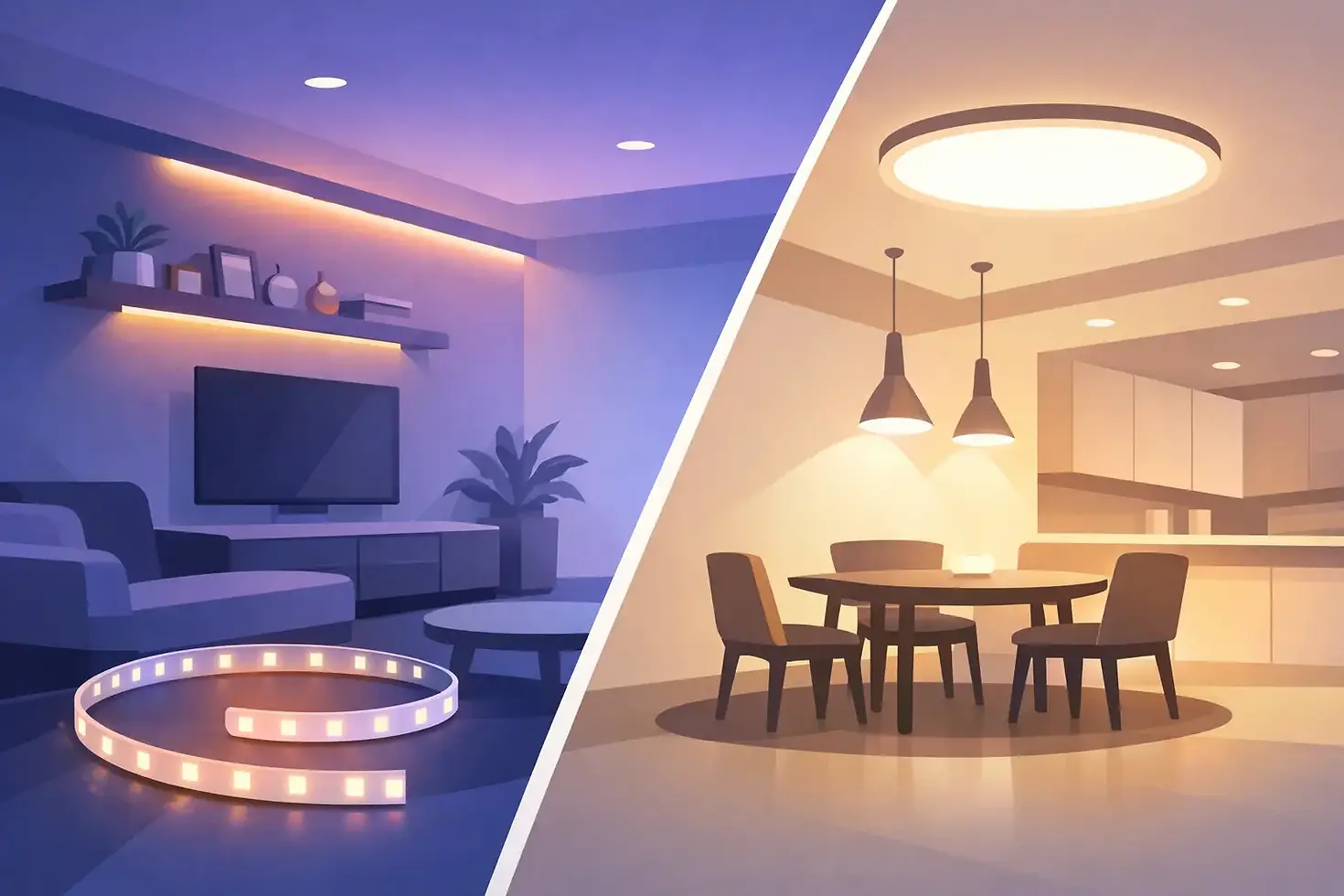
A living room can look beautifully renovated and still feel incomplete when the lighting is wrong. One harsh ceiling fixture can flatten the entire space, while decorative lighting without enough brightness makes everyday tasks difficult. When comparing LED strips vs ceiling lights, the better choice depends on what you need the room to do - and in many homes, the best result is a thoughtful combination of both.
For HDB flats, condos, and BTO homes where every square foot matters, lighting should do more than brighten a room. It should make spaces feel larger, support daily routines, create comfort at night, and work easily with the rest of your smart home setup.
Start With the Job Each Light Needs to Do
Ceiling lights are usually your main source of illumination. They light up the overall room, help you move around safely, and provide enough visibility for cleaning, cooking, getting dressed, or helping children with homework. They are the workhorse of a practical lighting plan.
LED strips do a different job. Installed within false ceilings, under cabinets, behind mirrors, along wardrobes, or beneath bed frames, they add indirect light and visual depth. Their glow is softer because the light is reflected off a surface instead of shining directly into the room.
The key question is not simply which option looks better. Ask whether you need functional brightness, mood, accent lighting, or all three. A kitchen needs clear task lighting. A bedroom benefits from a softer wind-down setting. A display cabinet may only need a gentle glow that highlights your favorite pieces.
Where LED Strips Make the Biggest Difference
LED strips are especially effective when you want a clean, built-in appearance without adding visual clutter. Because the light source can be concealed in an aluminum profile, cove, cabinet, or recess, you see the effect of the light rather than a visible fixture.
In living rooms, concealed LED strips in a false ceiling can create a warm perimeter glow that makes the ceiling appear higher. This is useful in apartments with lower ceiling heights, where a large hanging fixture may make the room feel crowded. Set to a warm white tone, strips can make a TV area feel calmer for movie nights without leaving the room completely dark.
In kitchens, under-cabinet LED strips solve a common problem: your body can block the overhead light while you prepare food. A strip placed below upper cabinets directs light onto the countertop, making chopping, measuring, and cleaning easier. It also gives the kitchen a polished finish after dark.
Wardrobes, vanity areas, and bathrooms are other strong use cases. Interior wardrobe strips help you see clothing colors properly, especially in deeper cabinets. Around a mirror, LED lighting can reduce harsh facial shadows. Near a bed, a low-level strip can act as a gentle night light, helping you move around without switching on a bright ceiling light.
The Trade-Offs of LED Strips
LED strips are not automatically the right answer for every room. Decorative strips alone rarely provide enough light for an entire living room, kitchen, or study. If they are installed too close to a glossy surface, they can create distracting reflections. Poor-quality strips may show visible dots instead of an even line of light.
Installation also deserves careful planning. The driver, wiring, profiles, and access point should be considered before carpentry or false ceiling works are completed. A concealed installation looks excellent, but it should still allow for future servicing. This is where professional planning saves time and avoids opening up finished surfaces later.
Why Ceiling Lights Still Matter
Ceiling lights provide broad, practical illumination from a central or distributed position. Depending on the room, that can mean a surface-mounted fixture, recessed downlights, track lights, a pendant, or a compact smart ceiling light.
For households that want a straightforward upgrade, ceiling lights offer a faster route to a brighter space. They are usually easier to replace than concealed strip systems and can be selected based on the room size, ceiling height, and existing electrical points.
A well-chosen ceiling light also gives you control over the room's character. A flush-mounted light keeps a bedroom neat and unobtrusive. Downlights create a more architectural look. Track lights can direct illumination toward artwork, dining areas, or a feature wall. In a dining room, a pendant can become a focal point while the surrounding lights handle the rest of the space.
The Limits of Relying on One Ceiling Fixture
A single central fixture is simple, but it often creates shadows around the edges of a room. It can leave countertops, wardrobes, and corners underlit. Bright white ceiling lighting may also feel too intense at night, especially in bedrooms and living areas meant for rest.
The solution is not always to add more downlights. Too many fixtures can make a ceiling look busy and create unnecessary glare. It is better to place light where it serves a purpose, then add LED strips or lamps where softer layers are needed.
LED Strips vs Ceiling Lights by Room
Living Room
Use ceiling lights for general brightness, especially when guests visit, children play, or the space needs cleaning. Add LED strips in the TV console, false ceiling, or display shelving for a more relaxed evening setting. If you mostly use the living room after work, dimmable lighting is worth considering.
Kitchen
Ceiling lights should cover the overall kitchen, while LED strips belong under upper cabinets and inside selected drawers or pantry units. This pairing gives you clear visibility where you prepare food without making the whole kitchen feel overly bright late at night.
Bedroom
A ceiling light is useful for dressing, housekeeping, and daytime use. LED strips work well behind a headboard, under a bed frame, or inside a wardrobe. Warm lighting is generally more comfortable here than cool white lighting, particularly before sleep.
Bathroom and Toilet
Ceiling lighting is necessary for safe, even visibility. A properly positioned mirror light or LED strip can improve grooming tasks, but it must be selected and installed for wet-area conditions. Avoid placing decorative strips where they will be exposed to direct water unless the product is rated for that environment.
Study and Home Office
Use ceiling lighting to prevent the room from feeling dim, but do not expect it to replace a proper desk lamp. LED strips can add a refined background glow behind shelves or monitors, yet task lighting should remain focused on the work surface to reduce eye strain.
Build a Lighting Plan Around Layers
The most comfortable homes use layers of light. Ambient lighting covers the room overall. Task lighting supports focused activities such as cooking or reading. Accent lighting adds depth, highlights a design feature, or creates a calmer atmosphere.
Ceiling lights usually carry the ambient layer. LED strips are excellent for task and accent layers, depending on placement. This is why choosing between them as if one must replace the other can lead to disappointing results.
Color temperature matters as much as fixture type. Warm white lighting creates a more restful feel in bedrooms and living rooms. Neutral white is often a practical choice for kitchens, bathrooms, and work areas. If you prefer flexibility, tunable white smart lighting lets you shift from brighter daytime light to a warmer evening tone through an app, remote, or voice control.
Make Lighting Easier to Control
Smart controls turn a good lighting layout into one that fits daily life. Instead of operating every light separately, you can group ceiling lights and LED strips by room or scene. A “Home” scene might turn on general lights at a comfortable brightness. A “Movie” scene can dim ceiling lights while leaving only cove or TV console strips on. A “Night” scene can activate low-level lighting in the hallway or bedroom.
This is particularly useful in homes with multiple lighting zones. It reduces the number of switches you need to manage and makes the home feel more responsive without making it complicated. At Smart Home Elements, lighting can be planned alongside switches, motorized curtains, ceiling fans, and other connected devices so daily controls stay simple.
Consider Budget, Maintenance, and Installation Early
A basic ceiling light upgrade is often more affordable upfront than a concealed LED strip installation. LED strips may involve additional costs for profiles, drivers, false ceiling work, carpentry coordination, and labor. However, they can add a premium built-in look and improve how usable areas such as wardrobes, kitchens, and TV consoles feel.
For either option, prioritize suitable brightness, reliable components, and serviceable installation over the lowest purchase price. Ask where the driver will sit, how it can be accessed, whether the strips will be diffused, and how each lighting zone will be controlled. Small planning decisions have a big impact once renovation work is complete.
The right lighting choice should support the way you actually live. Start with bright, dependable ceiling lighting where you need to see clearly, then use LED strips to bring comfort and character to the spaces you enjoy most. When each light has a purpose, your home feels better from the moment you walk in.


Comments