


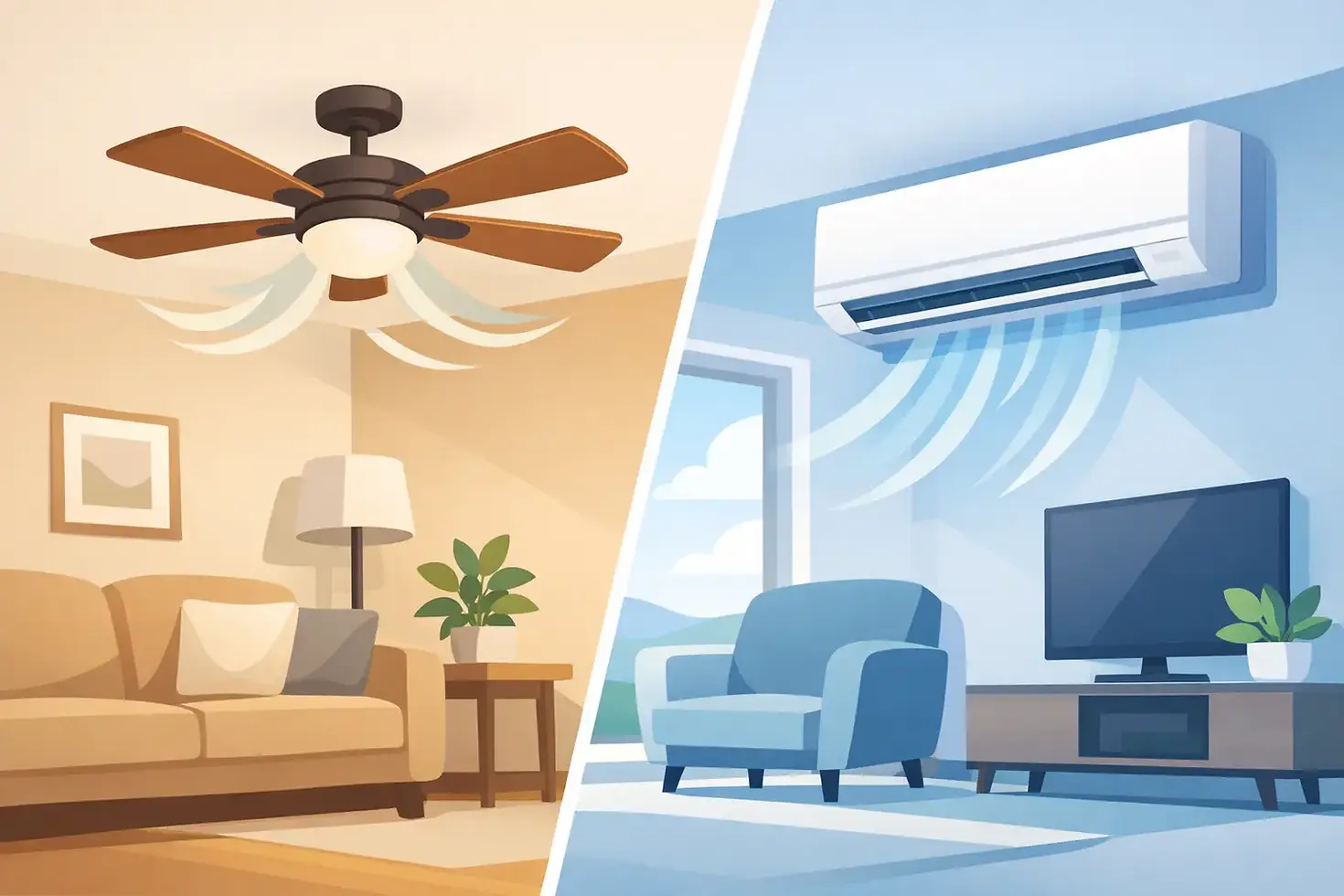
Ceiling Fan vs Aircon: Which Fits Your Home?
When your bedroom feels stuffy at night or your living room heats up by late afternoon, the ceiling fan vs aircon question gets real fast. This is not just about cooling. It is about monthly bills, how your home feels day to day, and whether your setup works for the way you actually live.
For most homes, the answer is not as simple as picking the cheaper product or the colder one. A ceiling fan and an air conditioner solve different comfort problems. One improves airflow. The other actively lowers room temperature. If you are furnishing a condo, upgrading an HDB flat, or planning a BTO setup, choosing the right one starts with how each room is used.
Ceiling fan vs aircon: what is the real difference?
A ceiling fan does not cool the air itself. It moves air around the room, which helps sweat evaporate from your skin and makes the space feel cooler. That is why a fan can feel effective even when the room temperature has not changed much.
An air conditioner works differently. It removes heat and humidity from the room, then circulates cooler air back in. That gives you a stronger and more controlled cooling effect, especially in hot and humid weather.
This difference matters because comfort is not only about temperature. In many urban homes, humidity is the bigger issue. If a room feels sticky, a fan may help a little, but air conditioning will usually make a more noticeable difference.
When a ceiling fan makes more sense
A ceiling fan is often the smarter choice when you want better daily comfort without a big jump in energy use. It is especially useful in living rooms, dining areas, study corners, and bedrooms that already get decent ventilation.
For households that prefer a lighter cooling effect, a ceiling fan can keep the space comfortable for long hours at a much lower operating cost. It also works well in homes where the cooling need changes throughout the day. You may not need full air conditioning in the morning, during rainy weather, or when the room is only mildly warm.
There is also a design advantage. Modern ceiling fans look cleaner than older models, and many fit neatly into contemporary interiors. In compact homes, that matters. You want airflow without making the room feel crowded or overly technical.
Another practical point is maintenance. Ceiling fans are generally simpler to maintain than air conditioning systems. Regular cleaning is still needed, but the upkeep is more straightforward and less costly over time.
When aircon is the better choice
Air conditioning is the stronger option when comfort needs to be precise and reliable. If you want a cooler room for sleeping, if your unit gets strong afternoon sun, or if your area tends to trap heat, aircon will do what a fan cannot.
Bedrooms are a common example. Many people can relax under a ceiling fan in the evening, but when it is time to sleep, they want the room to be cooler and less humid. The same goes for nurseries, home offices, and rooms with electronics that add heat.
Aircon also gives you more control. You can set a target temperature, run it on a timer, and create a predictable cooling environment. For busy households, that convenience matters. You do not have to guess whether airflow alone will be enough.
The trade-off is cost. Air conditioning usually costs more to install, more to run, and more to maintain. If you use it heavily every day, the difference will show up in your utility bills.
Ceiling fan vs aircon on cost and energy use
If your priority is efficiency, the ceiling fan usually wins on operating cost. Fans use far less electricity than air conditioners, which makes them appealing for households trying to manage monthly expenses without giving up comfort completely.
That said, the lowest-cost option is not always the best-value option. If a fan leaves the room warm and uncomfortable, you may still end up running aircon later for longer periods. In that case, the better question is not which product is cheaper on paper. It is which setup gives you the comfort you need with the least waste.
This is where room-by-room planning helps. A fan may be enough for shared spaces used throughout the day, while aircon may be worth reserving for bedrooms or rooms with poor ventilation. That kind of targeted setup often gives better results than relying on one solution for the entire home.
Comfort depends on the room, not just the product
The ceiling fan vs aircon decision changes depending on where you install it. In a living room with open space and regular movement, a fan often feels natural and efficient. In a smaller enclosed bedroom, especially one with limited airflow, aircon can make a bigger difference.
Ceiling height matters too. A ceiling fan needs the right installation conditions to perform well and safely. If the ceiling is too low or the room layout is awkward, the airflow may be less effective than expected.
Air conditioning depends more on insulation, room size, and how much heat enters the space. A poorly sealed room or one that gets direct sun can force the system to work harder. So while aircon is more powerful, its performance still depends on the room around it.
This is why a showroom or home consultation can be useful during renovation planning. Cooling is not only a product decision. It is part of how the entire home functions.
The best setup for many homes is both
For many homeowners, the real winner in the ceiling fan vs aircon debate is not one or the other. It is using both in a smarter way.
A ceiling fan can support your aircon by circulating cool air more evenly through the room. That can help the space feel comfortable faster, and in some cases lets you keep the thermostat at a more moderate setting. The result is a cooling setup that feels strong without always running at maximum intensity.
This combination is practical for modern homes because it gives flexibility. On milder days, you can use the fan alone. On hotter nights, you can switch on the aircon. When guests are over or the room feels extra warm, both can work together.
It also fits the way people actually live. Not every room needs full cooling all the time. A layered setup gives you more control over comfort and energy use without overcommitting to one extreme.
Smart control changes the experience
Cooling comfort is not only about hardware anymore. It is also about how easy the system is to control.
A ceiling fan with smart features or an aircon paired with app control can make the whole setup more convenient. You can schedule usage, adjust settings remotely, and reduce the small daily friction of managing different devices manually. That matters in busy homes where convenience is part of the upgrade, not just the product itself.
For homeowners planning a broader renovation, this is where integrated home solutions stand out. Instead of treating cooling as a separate purchase, it can be planned alongside lighting, switches, blinds, and other household systems. Smart Home Elements Pte Ltd is built around that kind of practical integration, where comfort improvements work better because they are considered together.
What should you choose?
If your goal is lower running cost, better airflow, and simple day-to-day comfort, a ceiling fan is often the right place to start. If your goal is colder air, humidity control, and consistent cooling for sleep or enclosed rooms, aircon is usually the better investment.
If you want the most balanced result, consider both. Use the fan as your everyday layer and reserve aircon for when conditions call for it. That approach suits many apartments and family homes because it gives you comfort without making every room dependent on heavy cooling.
The smartest choice is the one that fits your space, routine, and expectations. A home should not force you to adapt to your cooling system. Your cooling system should support how you already live, with less effort and more comfort every day.


Comments